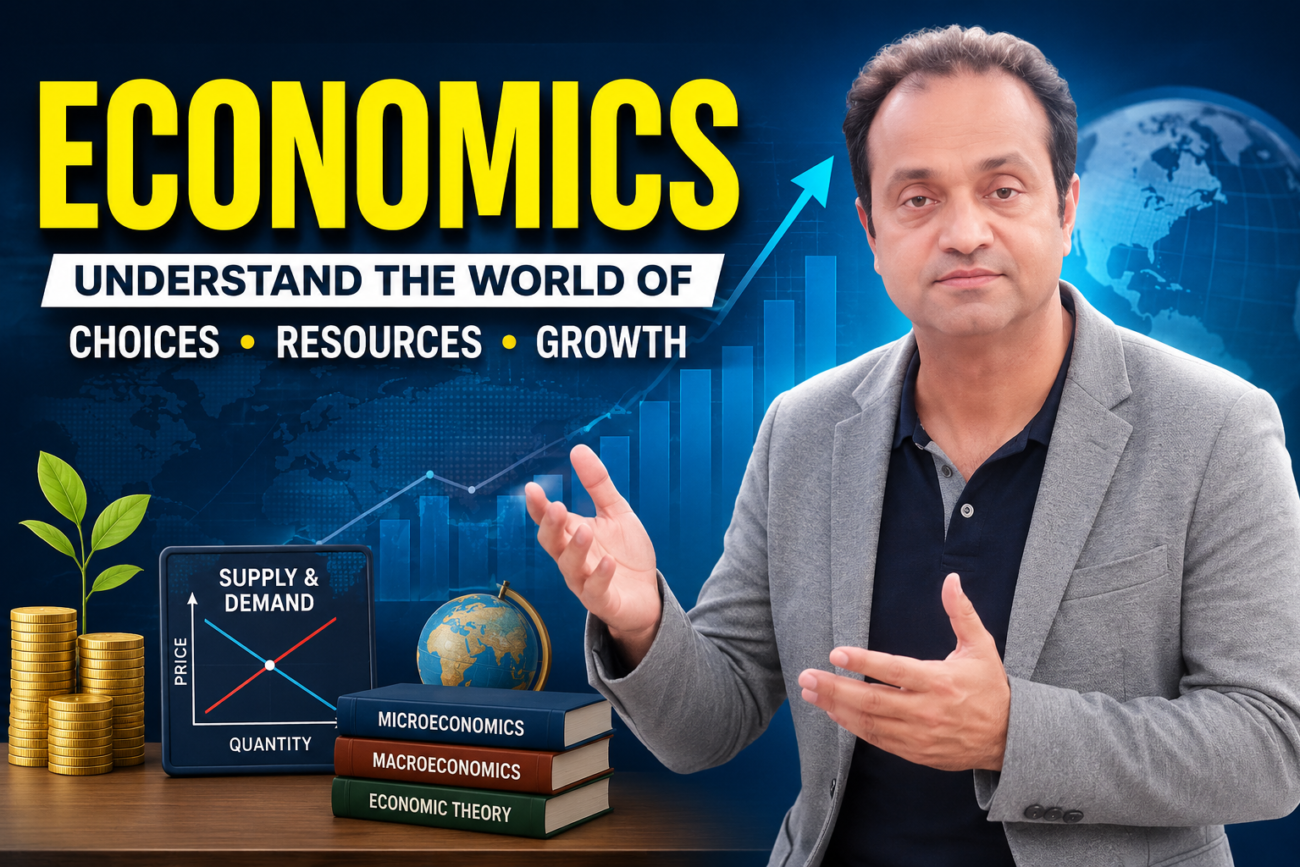
the topic Scarcity and Choice in Economics – Wealthonomics
Economics is often described as the study of how people, businesses, and governments make choices when resources are limited. At the heart of economics lie two fundamental concepts: scarcity and choice. These concepts explain why individuals must make decisions every day, from deciding how to spend their income to determining how governments allocate national resources.
Scarcity exists because human wants are virtually unlimited, while the resources available to satisfy those wants are limited. As a result, people must make choices about how to use these scarce resources most effectively. Understanding scarcity and choice helps us comprehend not only personal financial decisions but also broader economic issues such as production, consumption, and resource allocation.
What is Scarcity? and how to choice ?
Scarcity refers to the basic economic problem that arises because resources are limited while human wants are unlimited. Every society, regardless of its wealth or level of development, faces scarcity.
Examples of Scarcity
- Limited land for housing and agriculture
- Limited natural resources such as oil, water, and minerals
- Limited time available in a day
- Limited income to purchase goods and services
- Limited skilled labor in certain industries
Visual Example of Scarcity


7
In the image above, you can observe how limited resources must serve the needs of a growing population, illustrating the essence of scarcity.
Why Does Scarcity Exist?
Scarcity exists because of three primary reasons:
1. Unlimited Human Wants
People continuously desire more goods and services to improve their quality of life. Once one need is fulfilled, another often emerges.
Examples include:
- Better housing
- Advanced healthcare
- Higher education
- Modern technology
- Luxury products
2. Limited Resources
The factors of production are limited:
- Land: Natural resources and physical space
- Labor: Human effort and skills
- Capital: Machinery, tools, and infrastructure
- Entrepreneurship: Ability to organize production
3. Alternative Uses of Resources
Resources can often be used for multiple purposes. For example:
- Land can be used for farming or housing.
- Steel can be used to manufacture cars or construction materials.
- Government funds can support education or healthcare.
Because resources have competing uses, choices become necessary.
The Concept of Choice
Choice refers to the decisions individuals, firms, and governments make regarding the use of scarce resources.
Every choice involves selecting one option while giving up another.
Everyday Choices
Examples include:
- Choosing between saving money and spending it.
- Choosing between studying and entertainment.
- Choosing between purchasing a smartphone or a laptop.
Business Choices
Firms must decide:
- What products to produce
- How much to produce
- Which production methods to use
- How many workers to hire
Government Choices
Governments face choices regarding:
- Defense spending
- Healthcare funding
- Educational investment
- Infrastructure development
Opportunity Cost: The Cost of Choice
Whenever a choice is made, an alternative is sacrificed. The value of the next best alternative forgone is called opportunity cost.
Example
Suppose a student spends two hours watching a movie instead of studying.
The opportunity cost is the learning or academic improvement that could have been gained during those two hours.
Real-Life Example
A government may choose to build highways instead of hospitals.
The opportunity cost is the healthcare services that could have been provided.
Visualizing Opportunity Cost


5
Opportunity cost helps individuals and organizations make more informed decisions.
Scarcity and the Economic Problem
The economic problem arises because society has limited resources but unlimited wants.
Every economy must answer three fundamental questions:
1. What to Produce?
Should resources be used to produce:
- Food?
- Clothing?
- Healthcare services?
- Technology products?
2. How to Produce?
Should production use:
- Labor-intensive methods?
- Capital-intensive methods?
3. For Whom to Produce?
Who receives the goods and services produced?
- High-income groups?
- Low-income groups?
- Equal distribution among citizens?
These questions exist because scarcity forces societies to prioritize.
Factors of Production and Scarcity /choice
Land
Land includes natural resources such as:
- Water
- Forests
- Minerals
- Agricultural land
Many of these resources are finite.
Labor
Labor refers to human effort.
Scarcity occurs when there is a shortage of skilled workers in sectors such as:
- Medicine
- Engineering
- Information technology
Capital
Capital includes machinery, factories, and equipment.
Not all countries have equal access to capital resources.
Entrepreneurship
Entrepreneurs coordinate production and assume risks.
Innovative entrepreneurs are relatively scarce compared to the number of business opportunities available.
The Production Possibility Frontier (PPF)
Economists use the Production Possibility Frontier to illustrate scarcity and choice.
A PPF shows the maximum combinations of two goods that can be produced using available resources efficiently.
Key Concepts of PPF
- Points on the curve represent efficient resource use.
- Points inside the curve indicate underutilized resources.
- Points outside the curve are currently unattainable.
Illustration of Scarcity and Trade-Offs
Demand shift
Supply shift
Modify demand or supply to see how equilibrium changes.2040608010020406080DemandSupplyQuantityPrice
Although the graph above focuses on market relationships, it also demonstrates how limited resources and changing conditions influence economic outcomes and choices.
Example
Suppose an economy produces:
- Consumer goods
- Military equipment
Producing more military equipment often means producing fewer consumer goods.
This trade-off demonstrates scarcity.
Scarcity in Personal Finance
Individuals face scarcity every day because income is limited.
Budget Constraints
Most people cannot purchase everything they want.
As a result, they prioritize:
- Essential expenses
- Savings
- Investments
- Recreation
Example
A person earning $1,000 monthly may need to choose between:
- Purchasing a new smartphone
- Investing in professional training
The choice depends on expected benefits and priorities.
Scarcity in Business Decision-Making
Businesses operate under resource constraints.
Limited Capital
Companies have limited funds available for:
- Research and development
- Marketing
- Expansion projects
Limited Workforce
Organizations may lack sufficient skilled employees.
Limited Production Capacity
Factories can only produce a certain quantity within a given time period.
Because of these limitations, managers must decide how to allocate resources efficiently.
Business Resource Allocation


6
Scarcity in Government Planning
Governments also experience scarcity.
Public budgets are limited, while societal needs are extensive.
Examples of Government Choices
A government may choose between:
- Building schools
- Expanding hospitals
- Improving transportation networks
- Increasing defense spending
Because resources are limited, governments cannot fully satisfy every demand simultaneously.
Scarcity and Natural Resources
Many natural resources are finite.
Examples
- Oil reserves
- Natural gas
- Freshwater supplies
- Rare earth minerals
Population growth increases pressure on these resources.
Environmental Concerns
Scarcity often leads to:
- Resource conservation
- Sustainable development initiatives
- Renewable energy adoption
Natural Resource Challenges


7
These solutions aim to ensure resources remain available for future generations.
How Markets Respond to Scarcity
Markets help allocate scarce resources through the price system.
Rising Prices
When a product becomes scarce:
- Supply decreases
- Prices increase
Higher prices encourage:
- Reduced consumption
- Increased production
Falling Prices
When resources become more abundant:
- Supply increases
- Prices decrease
Consumers benefit through greater affordability.
Scarcity and Economic Growth
Economic growth helps reduce the impact of scarcity, although it does not eliminate it completely.
Sources of Economic Growth
- Technological advancement
- Increased productivity
- Better education
- Infrastructure development
Example
Modern agricultural technology allows farmers to produce more food from the same amount of land.
This improves resource efficiency and helps address scarcity.
The Role of Technology in Overcoming Scarcity
Technology often enables societies to utilize resources more efficiently.
Examples
- Solar energy reduces dependence on fossil fuels.
- Online education expands access to learning.
- Automation increases manufacturing productivity.
- Artificial intelligence improves resource allocation.
Technology and Innovation


6
Technology does not eliminate scarcity entirely, but it can significantly reduce its effects.
Scarcity, Choice, and Consumer Behavior
Consumers constantly make choices based on:
- Income levels
- Preferences
- Product prices
- Availability
Rational Decision-Making
Economic theory suggests consumers seek maximum satisfaction from available resources.
For example:
A consumer with a fixed budget may compare:
- Product quality
- Price
- Durability
before making a purchase.
Importance of Understanding Scarcity and Choice
Understanding these concepts helps individuals:
- Make better financial decisions
- Manage resources efficiently
- Evaluate trade-offs
- Understand economic policies
It also helps businesses and governments allocate resources in ways that maximize benefits.
Conclusion
Scarcity and choice are the foundation of economics. Because resources such as land, labor, capital, and time are limited, individuals, businesses, and governments must make choices about how these resources are used. Every choice involves an opportunity cost, highlighting the trade-offs inherent in decision-making.
From personal budgeting to national economic planning, scarcity influences nearly every aspect of economic life. While technological innovation and economic growth can reduce the effects of scarcity, they cannot eliminate the fundamental reality that resources remain finite while human wants continue to expand. Therefore, understanding scarcity and choice is essential for making informed decisions and achieving efficient resource allocation in both personal and societal contexts.